Every platform has "vetted talent" these days.
LinkedIn screeners. Skills tests. Portfolio reviews. Reference checks. The whole nine yards.
And sure, that matters. You don't want to hand your critical transformation project to someone who can't spell "stakeholder."
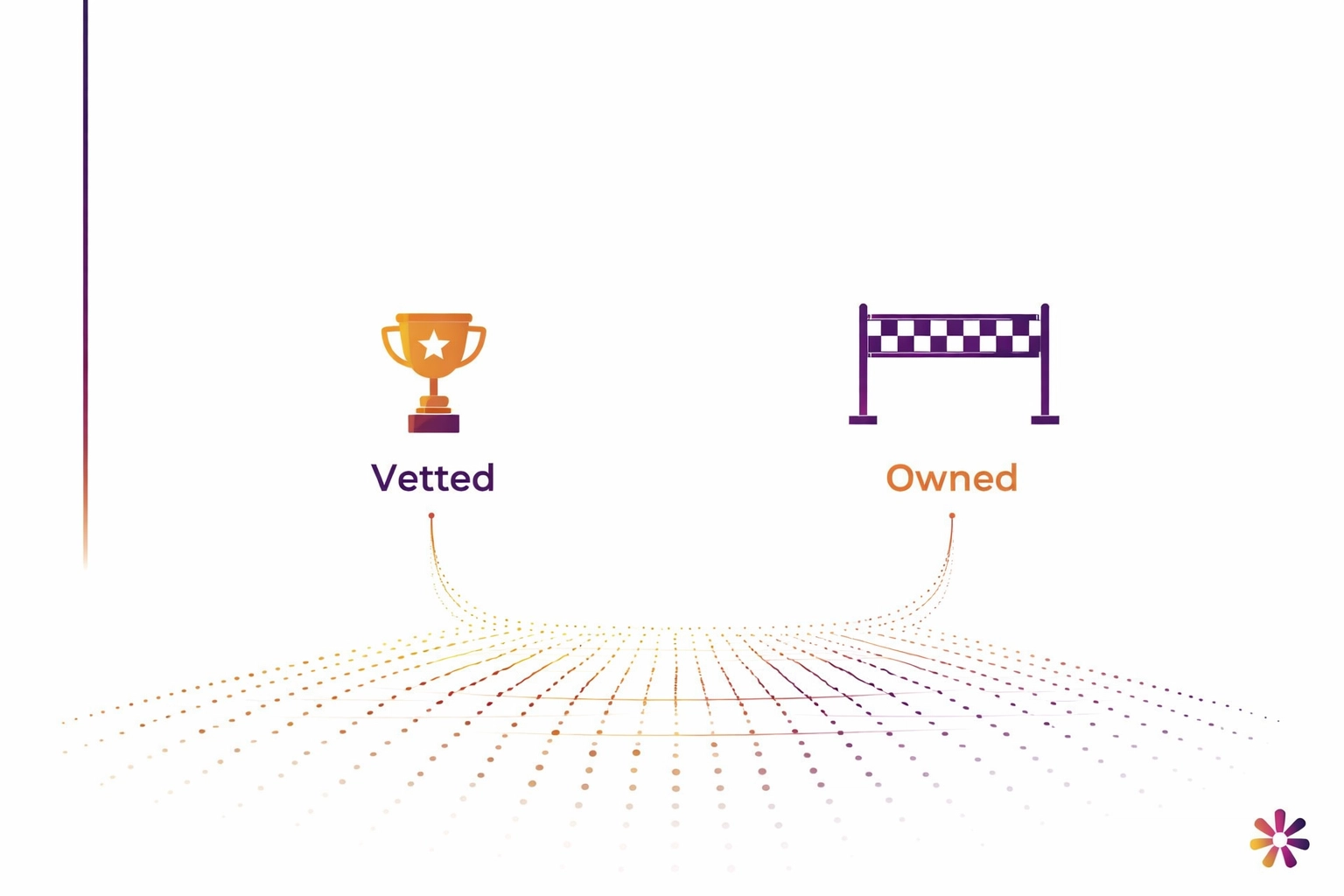
But here's the uncomfortable truth most talent platforms won't tell you: vetting gets you to the starting line. It doesn't get you across the finish.
Vetting is the participation trophy. Owning delivery is the finish line.
Because the hardest part of any engagement isn't finding someone smart. It's making sure that person actually delivers what you need, when you need it, under the conditions that exist in your organization, not in a vacuum.
The "Vetted" Illusion: What Actually Breaks Down
Let's talk about what happens after the introduction.
You get matched with a stellar consultant. Great resume. Fantastic interview. Everyone's excited.
Week two: your internal stakeholder can't get time on their calendar.
Week four: the scope has drifted because no one clarified deliverables upfront.
Week six: the consultant ghosts mid-project because a bigger client just called.
Week eight: you're starting over.
The platform that made the introduction? They got paid. They're not responsible for what happens next.
This is the gap between vetted and owned.
Vetted means someone reviewed credentials. Owned means someone is accountable, on an ongoing basis, for execution, governance, and outcomes.
What "Owning the Outcome" Actually Looks Like
Let's get specific. When we say Espire Collective owns delivery, here's what that means in practice:
Single point of contact. You're not managing multiple consultants across multiple contracts with multiple invoices. You work with us. We handle the orchestration.
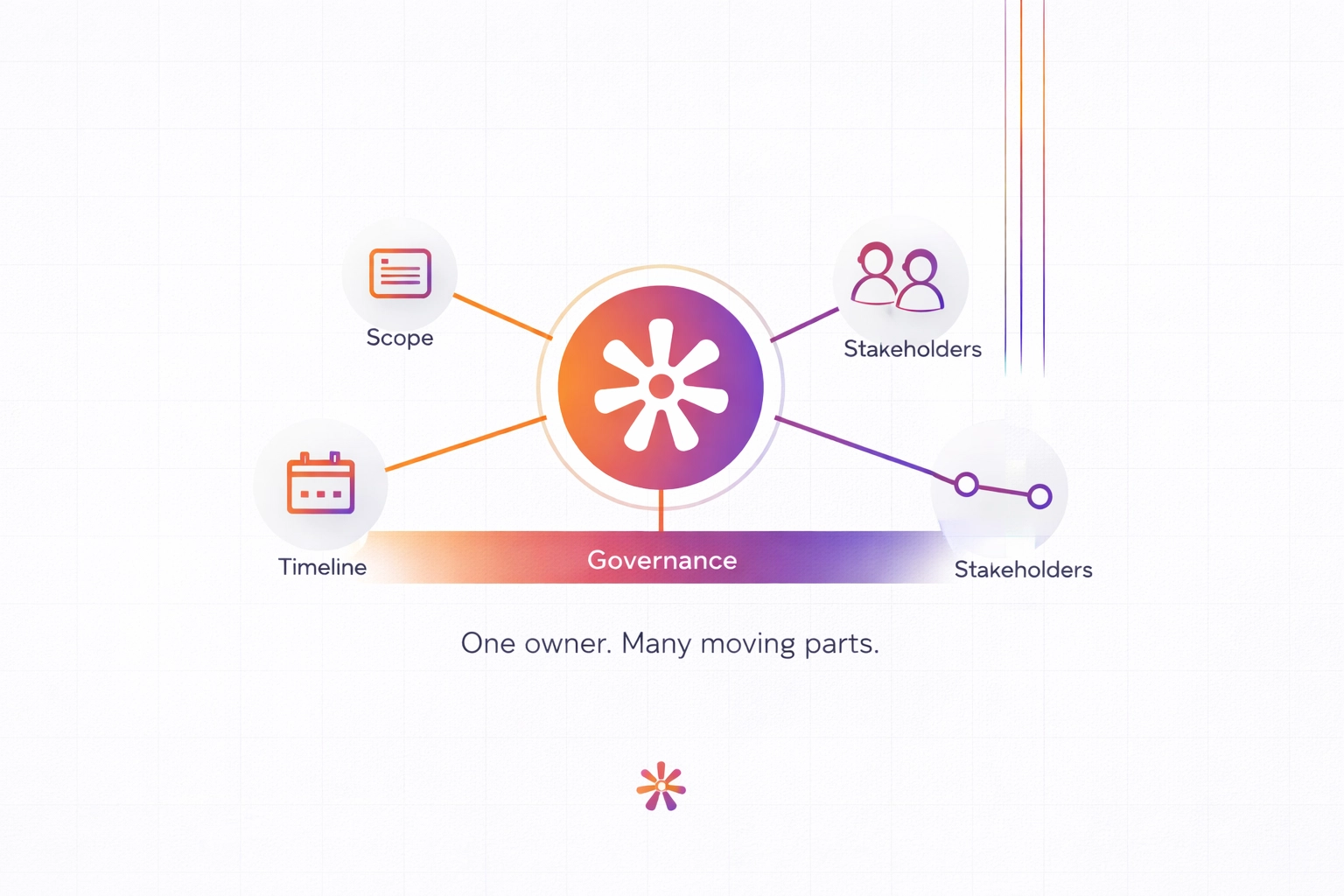
Delivery governance. We don't just introduce you to smart people and disappear. We maintain oversight on scope, timelines, and stakeholder alignment throughout the engagement.
Compliance and risk management. If something goes sideways, regulatory shift, personnel change, deliverable mismatch, we're the ones managing continuity and solving for it.
Strategic flexibility. Your priorities shift mid-engagement? We adjust. You need someone to move from advisory to hands-on execution? Our members operate across that spectrum, and we make it seamless.
This isn't consulting-as-transaction. It's consulting-as-partnership.
The Hidden Cost of "Introduction-Only" Models
Here's what most companies don't realize until it's too late:
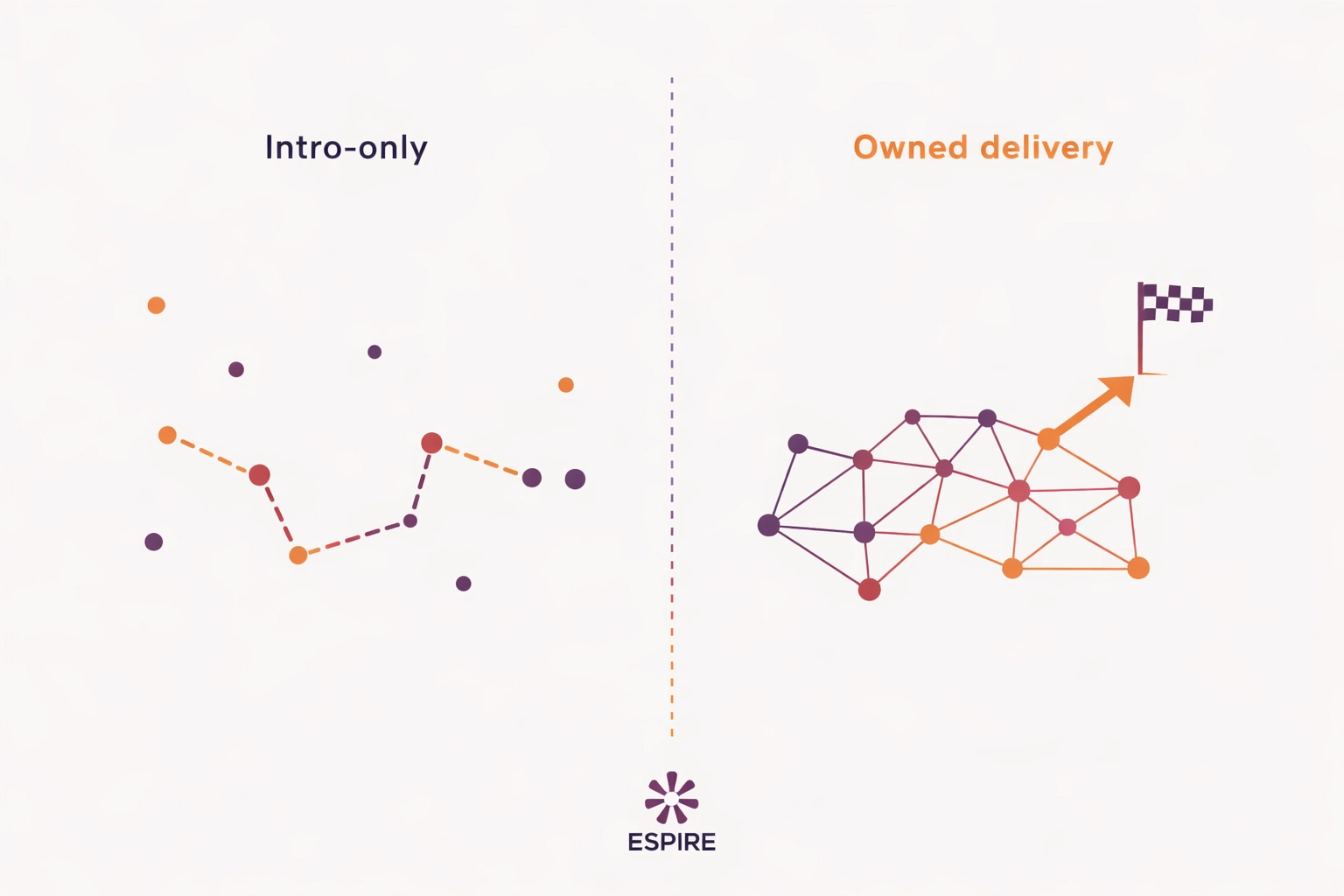
When you hire talent through an introduction-only platform, you inherit all the operational overhead.
You're the project manager. You're the compliance officer. You're the one navigating scope creep, miscommunication, and misaligned expectations.
And when things go wrong? The platform shrugs. "We just make introductions. What happens after that is between you and the consultant."
That model works fine for low-stakes projects. Design a logo. Build a landing page. Write some copy.
But for high-visibility, business-critical work, the kind where failure has real consequences, it's a recipe for expensive chaos.
Strategic transformations don't fail because someone wasn't "vetted" well enough. They fail because no one owned the connective tissue, the alignment conversations, the execution checkpoints, the continuous course-correction that keeps complex work on track.
Why Executive and SME-Level Operators Change the Equation
Here's where Espire Collective's model diverges even further.
There's application for gigs and freelance, but that's not what we do. Espire's members are deeply experienced consultants who operate at the Executive and subject matter expert level, whether they're advising your leadership team or rolling up their sleeves to build the thing.
That range matters.
A lot of consulting engagements fail at the handoff. Strategy gets developed in a vacuum, then handed off to operators who weren't in the room. Or execution happens without strategic context, and the work doesn't ladder up to the real goal.
Our members bridge that gap. They can sit in the boardroom and shape your three-year roadmap. Then they can step into the operation and execute quarter one.
Not as generalists trying to do everything. As specialists who understand how strategy and execution have to talk to each other.
Governance Isn't Sexy, But It's Everything
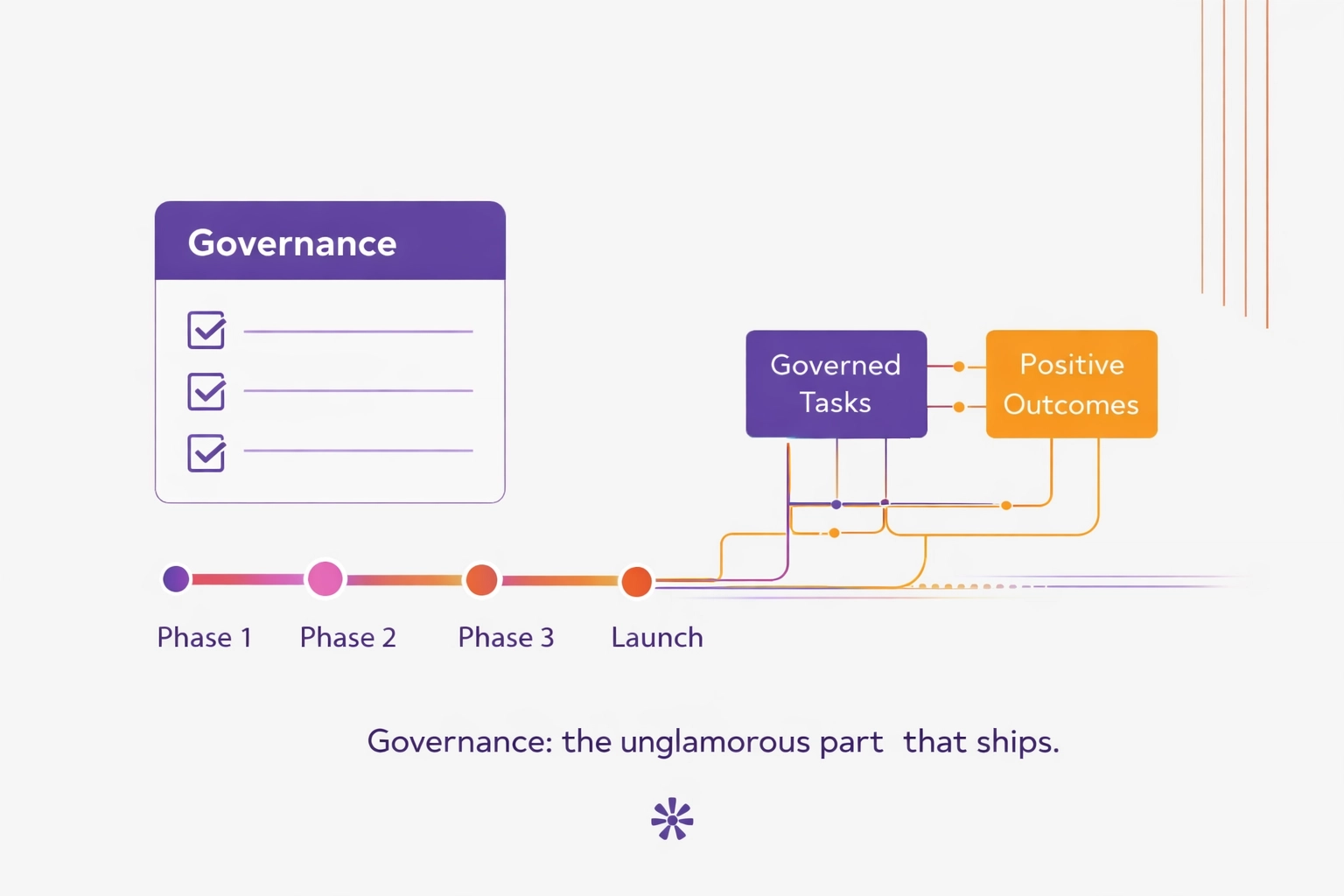
Let's be honest, no one wakes up excited about "delivery governance."
But it's the thing that determines whether your high-stakes project becomes a case study or a cautionary tale.
Governance means:
- Defined success metrics that everyone agrees on upfront, not retroactively.
- Regular milestone check-ins where we surface risks before they become crises.
- Clear escalation paths so when decisions need to be made, they get made by the right people.
- Documentation and continuity protocols so institutional knowledge doesn't walk out the door if someone leaves.
This is the work that happens in the margins. The work that doesn't show up on a LinkedIn profile or a portfolio site.
But it's the difference between "we hired someone great" and "we actually achieved the outcome."
When you work with Espire Collective, we own that layer. You focus on your business. We focus on making sure the engagement delivers.
The Trust Tax (And How We Eliminate It)
Every new consulting relationship starts with a trust deficit.
Can this person do the work? Will they show up? Do they understand our constraints? Will they disappear when things get hard?
In traditional models, you pay that trust tax every single time. New consultant, new risk assessment, new onboarding process, new probationary period while you figure out if they're actually as good as they seemed.
With Espire Collective, the trust layer is built into the model.
We've already done the deep vetting, not just skills, but working style, communication cadence, and ability to operate under real-world constraints.
But more importantly: we're the constant. You're not building trust with a rotating cast of consultants. You're building trust with us, and we ensure consistency, quality, and accountability across every engagement across our community of independent and boutique consultancies.
That eliminates the tax. You're not starting from zero every time.
What This Means for Your Next Engagement
If you're evaluating consulting support right now, here's the lens to apply:
Ask yourself: Who owns the outcome?
Not "who's doing the work": that's table stakes.
Who's accountable if the scope drifts? Who's managing stakeholder alignment? Who's ensuring continuity if priorities shift? Who's responsible for making sure this engagement actually delivers what you need?
If the answer is "you are," you're not hiring a consulting partner. You're hiring labor and managing it yourself.
If the answer is "we are": meaning the organization providing the consultant takes responsibility for delivery governance, execution quality, and continuous alignment: then you've found a model that actually scales.
The Bottom Line: Vetted Gets You In the Door. Owned Gets You to the Finish.
Here's where we land:
Vetting is important. But it's the baseline, not the value proposition.
The real differentiator is who takes ownership: not just of credentials, but of execution, governance, risk, and results.
At Espire Collective, we don't introduce you to great consultants and wish you luck.
We deploy them. We manage the engagement. We own the delivery.
Because at the end of the day, what matters isn't whether someone passed the interview. It's whether they, and we, delivered the outcome you needed.
If you're navigating a high-stakes project and need more than just a warm intro, let's talk. What's been the hardest part of managing external expertise?